


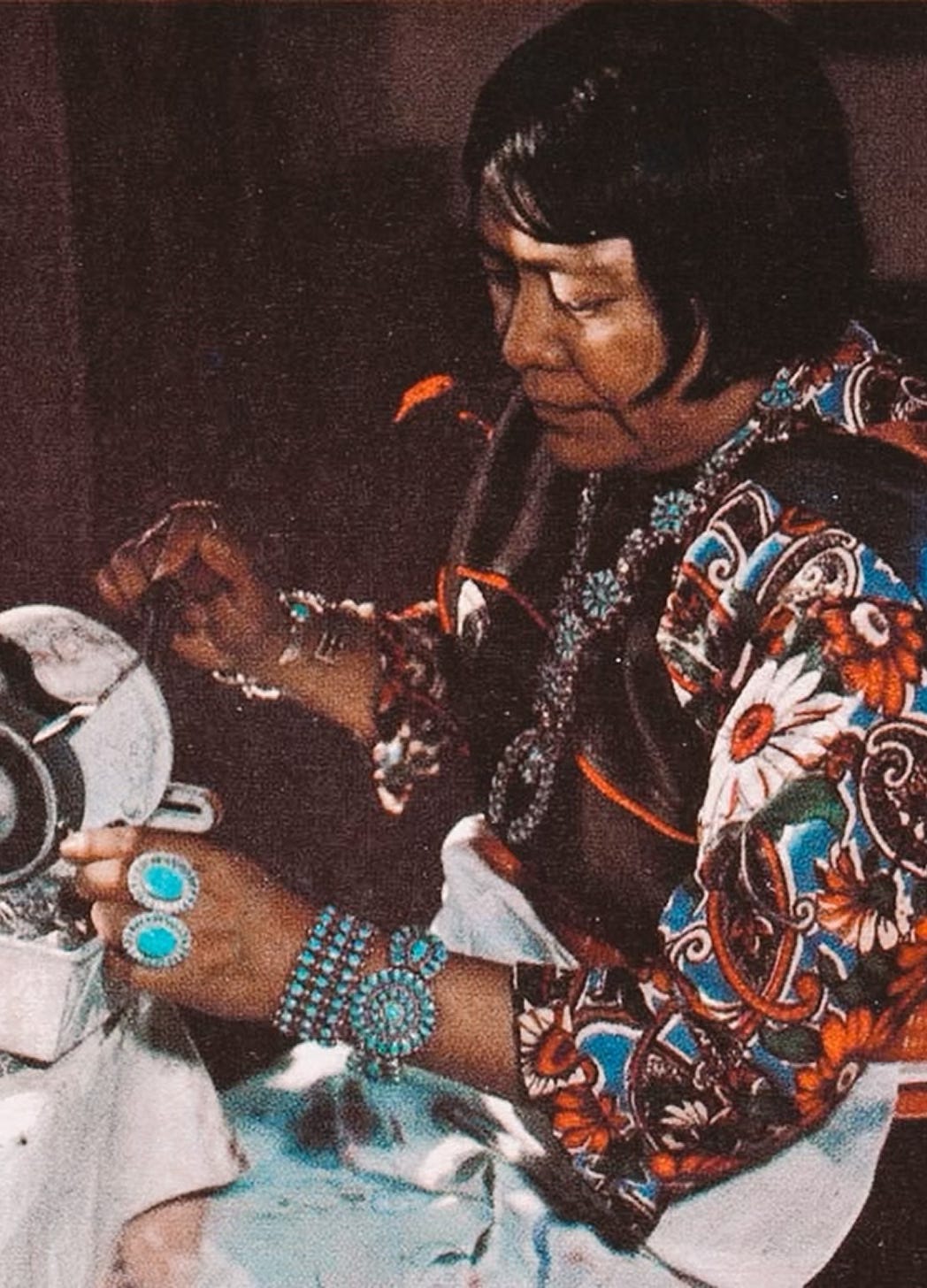
Della Casa Appa was the first woman from the Zuni Pueblo (A:shiwi) to become a professional silversmith. She was born in 1889 into a traditional Zuni family known by the surname Appa (sometimes recorded as Casi). There is scarce documentation about her parents or siblings. Appa’s education combined knowledge from community elders with her boarding school, influenced at the time by U.S. assimilation policy. She learned the Zuni language, oral histories, agricultural techniques, and rituals by observing and participating in family and clan activities. Growing up in a matrilineal society fostered her strong interest in Indigenous craftsmanship.
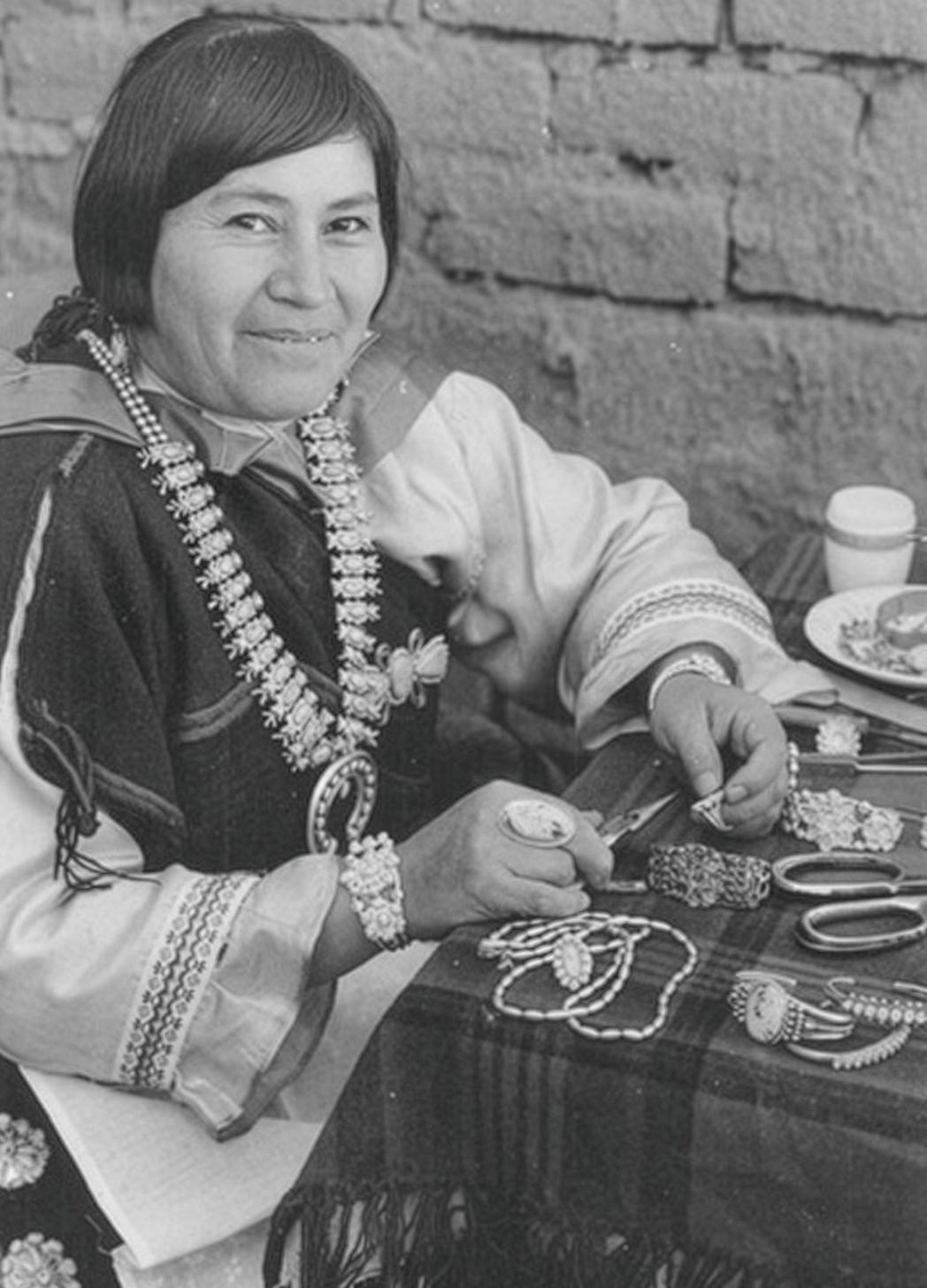
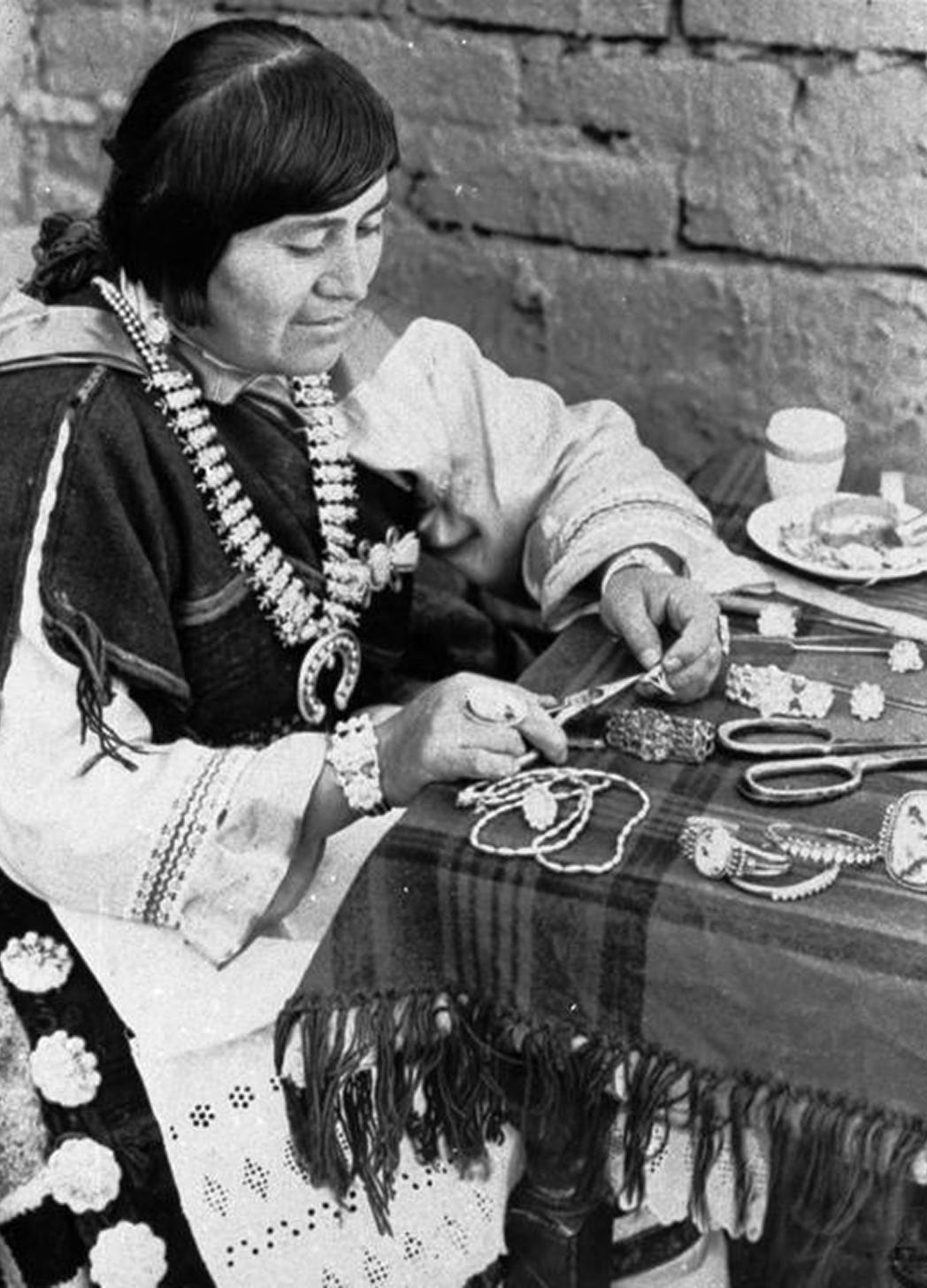
Appa’s husband, Ka’asi, was a respected community leader, philanthropist, and silversmith. She assisted him in their home studio before making jewelry on her own. By 1927, Appa worked with trader Charles Garrett Wallace, delivering her pieces after hours to avoid confrontations. She soon gained recognition for her skills and joined a group of artists who set the standard for Zuni lapidary work.
In the 1920s, American trader C.G. Wallace bought the local trading post and saw an opportunity for tourism along Route 66 and the Santa Fe Railroad. He supplied the working silversmiths, jewelry makers, and lapidaries with materials and advised them on designs that would appeal to buyers. The jewelry at Wallace’s trading post during this period was among the highest quality and Appa was one of his favourite artists. I have read conflicting accounts of Wallace’s reputation and found his stories from this era unreliable.
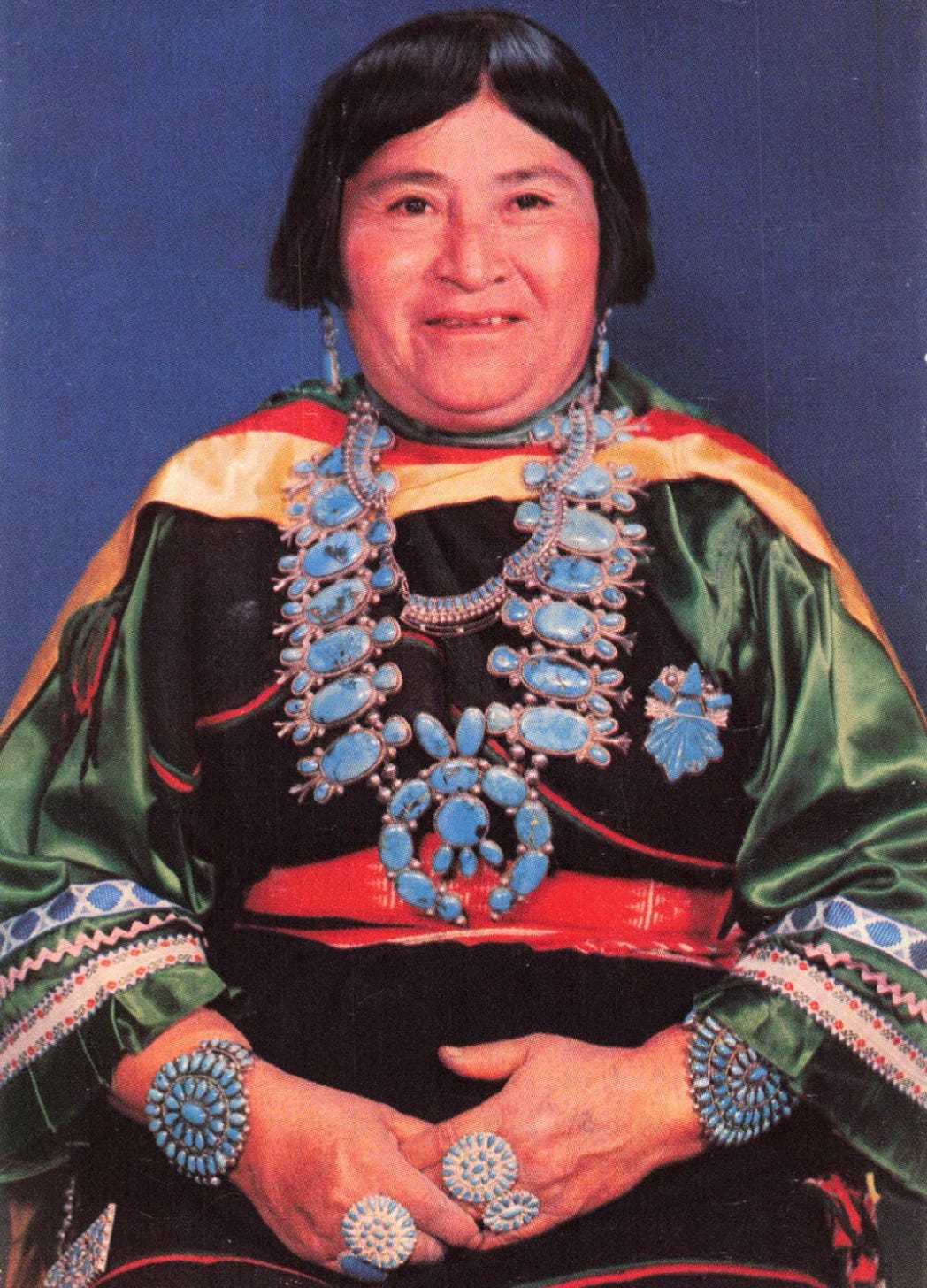
By 1938, nine women in the village made silver for the traders at Zuni. Unlike the large, naturally shaped stones and embellished silverwork of the Navajo or the distinctive silver-overlay jewelry of the Hopi, Zuni jewelry features small, uniform stones set into delicate silver bezels. Zuni artisans are best known for silver-and-turquoise cluster work, where stones are arranged in rosettes or rows, and for elaborate mosaic inlay work using stones and shells such as black jet and mother-of-pearl.
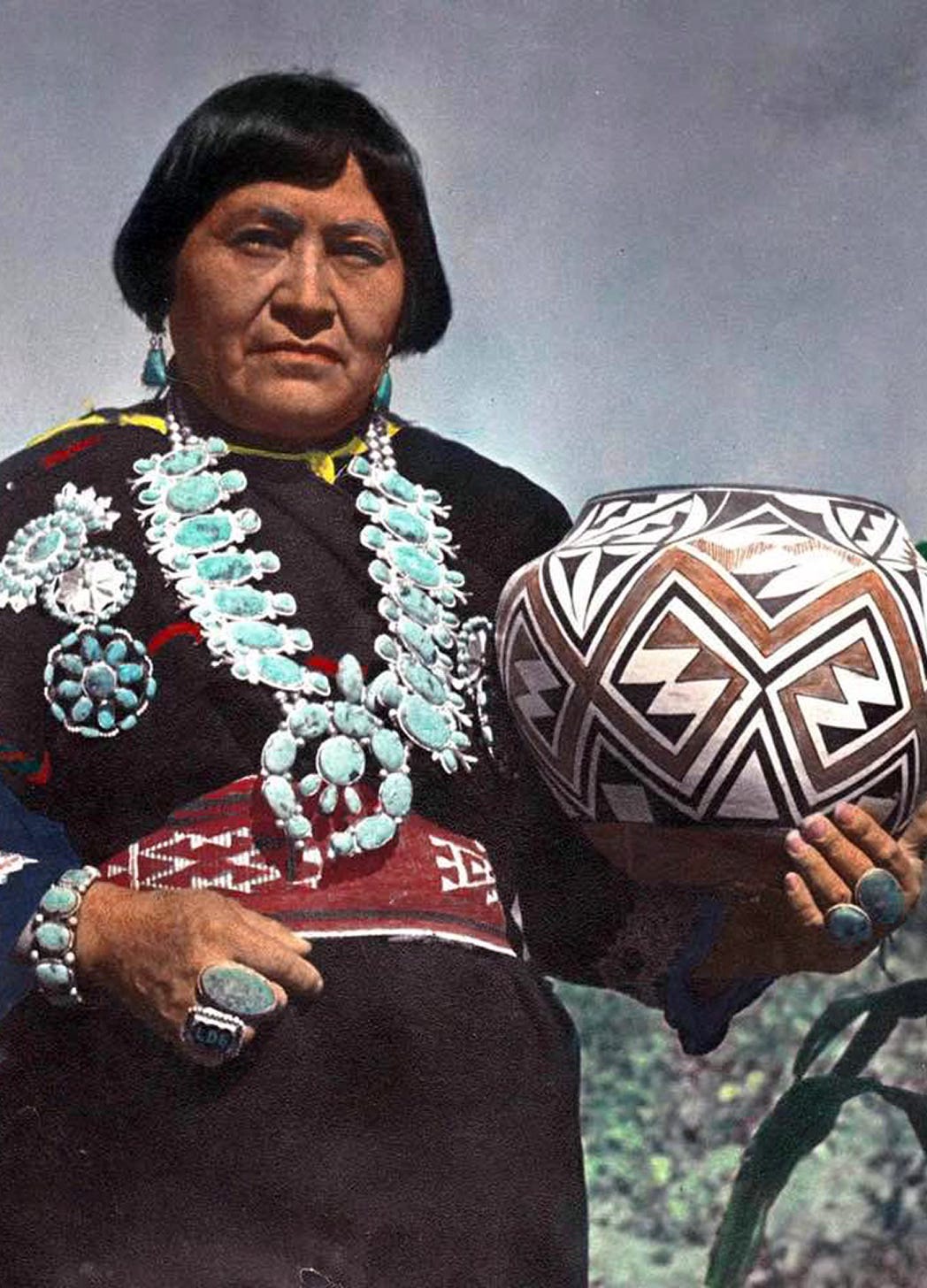
The BIA magazine Indians at Work featured Appa several times in the 1930s. With delicate intricacy and balanced asymmetry, her signature designs incorporate traditional motifs and geometric patterns central to Zuni mythology and cosmology. Appa’s style evolved as access to refined equipment allowed her to create more elaborate and consistent work.
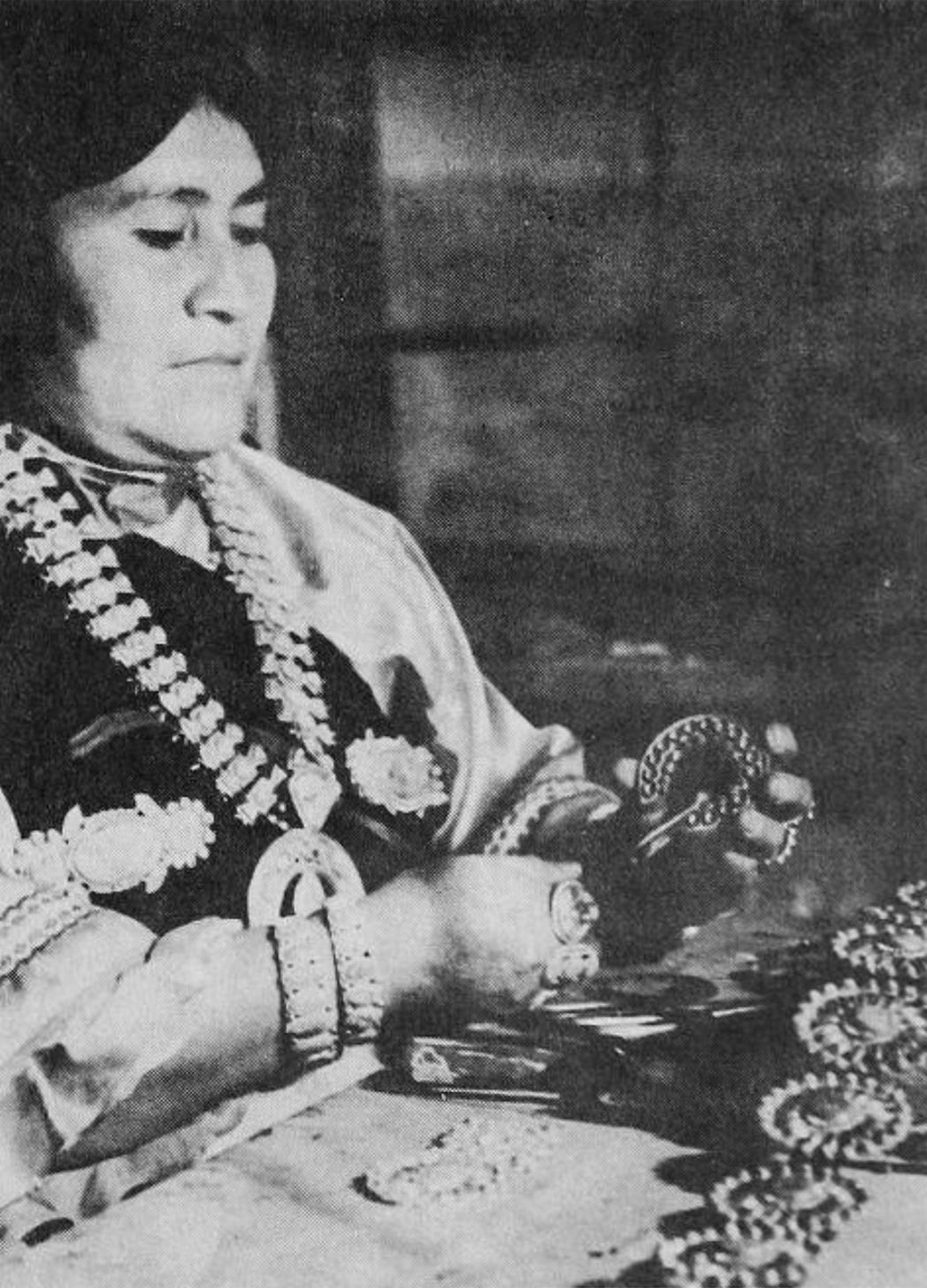
While details of her life after World War II remain undocumented, Native American artisans navigated shifting markets for silver and turquoise. Women silversmiths found beadwork more lucrative in the 1940s and 50s. Appa remained active in her craft until her death in December 1963. She is noted alongside Leo Poblano and Dan Simplicio for producing the highest quality work of the era.
Below is an article featuring Appa from Indians at Work, Vol. 4 No. 3 (Sept. 15, 1936)
ZUNI SILVERSMITHING by Kenneth M. Chapman
